Thursday, August 8, 2013

Swamped...

The last two weeks, I've either been or a trip or recovering from jetlag. Therefore, this means that I have been unable to post. I apologize, and hope to start posting regularly again next week.

My trip to India, however, was enlightening, and I can't wait to share my experiences with you!

Saturday, July 27, 2013

A Talk with Mr. Satyarthi....

This past Tuesday, I had the wonderful experience of being able to talk to Kailash Satyarthi over the phone.  We talked about a variety of things, which I'll detail a little bit more in this post. Remember, I profiled him here in a previous post. Mr. Satyarthi has dedicated his life to fighting child labor on a global scale.

Mr. Satyarthi told me that while child labor is slowly being eradicated in India, especially in rural areas, it still is a very prevalent problem, and that law enforcement is just as important as the law when dealing with this issue. India is soon going to institute key amendments to its Constitution that prohibit any child under 14 from working.

His organization has set up numerous campaigns and fundraisers, as well as conducted several raids on child labor hotspots, freeing children, rehabilitating them, and educating them in the process. He also told me ways that I can help - Getting involved in campaigns, writing, and outreaching. We even discussed setting up a new program - 'Child Ambassadors' - For which I could be an inaugural member.

It was a true honor talking to Mr. Satyarthi, and one that I wanted to share with you. We can all learn a little something from this incredibly kind and courageous man.


Friday, July 19, 2013

The US Would Boycott Child Labor?

According to a survey conducted this week, more than three-quarters of Americans would try to avoid purchasing clothes made by child laborers.

The survey was conducted by ChildFund International, and also concluded that 55% of those surveyed would pay higher prices for clothing made by adult workers, and on average would pay 34% more.

"These survey findings provide telling insight into Americans' attitudes about child labor and should help companies understand that they need not make economic choices over moral ones", says Anne Lynam Goddard, president and CEO of ChildFund. "I believe that American customers will become increasingly educated about the source of the products they purchase and begin   making more knowledgable and ethically-driven buying decisions."

On the other hand, the poll found that most Americans are grossly misinformed about the global prevalence of child labor. Although numbers have reduced in recent years, more than 150 million children still work worldwide, and 73% of responders put the number at 1 million or less.

This poll is a true eye-opener in terms of the difference between being motivated and being informed. The good news is that Americans would boycott these products, and with that in mind, a national boycott could be arranged. But even more important is being educated on these issues, because misinformation has been one of the most dangerous tools in history.

Friday, July 12, 2013

Child Labor Crisis...In Greece?

When someone says "child labor", our mind immediately jumps to kids working in third-world countries like India or sub-Saharan Africa. It's a well-founded assumption, but we should keep in mind that child labor is not only a "developing world" problem. The recent revelations that over 100,000 children are illegally working in Greece are a prime example.

Greece is a country in deep trouble, and its problems regarding child labor should come as no surprise given its economic woes. The country is in its sixth year of recession and nearly 10% of children live in a family where not even one person has a job. The rise in illegal child labor has come at a time when unemployment is staggeringly high - The overall rate is 26.8%, and for young people under 25, 59.2%. As middle and lower-class families come under financial stress, the overall school dropout rates are equally alarming. 11.4% of the student population - That is, 70,000 students - dropped out of school in 2012. 3,500 of those students had yet to complete primary school.

And Greece's history doesn't point to a happy ending. The Southern European nation has one of the worst track records in terms of policies protecting children, a fact that is reflected by the half a million Greek children now living in poverty. In order to get themselves out of this crisis, Greece needs to train labor inspectors and create a centralized body to deal with these issues. As the country's financial troubles get worse and worse, the very youngest Greek citizens are at risk. The economy is only the start of Greece's worries.

Thursday, July 4, 2013

Internet Problems...

Hi everybody,

I'm currently in India over the summer, and the Internet has been extremely flaky. Due to these unforeseen problems, I can't write a full blog post this week. I apologize to all my readers, and please stay tuned for next week's blog post!

- Arjun

Friday, June 28, 2013

The FLSA at 75

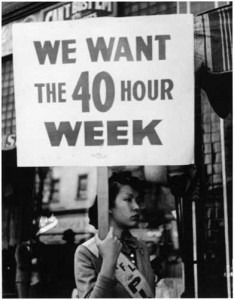
On June 25, 2013, we saw the 75th anniversary of the Fair Labor Standards Act ( FLSA ), a landmark piece of legislation signed by President Roosevelt in 1938. What did it do? Basically, it outlawed "oppressive child labor", imposed a federal minimum wage of 25 cents an hour, and limited work hours to 40 a week. A diamond jubilee later, we look into how well the FLSA in currently working.

Turn the clock back to 1938. Child labor is rampant, worker rights are being abused and conditions are terrible, and America still finds itself mired in one of the greatest economic collapses in history. This law was necessary to restore some sort of stability to the industry, but now it is not so favored among employers and employees alike.

On the employee side, the minimum wage of $7.25 per hour is viewed as inadequate and insufficient for workers to escape the poverty level. Particularly galling to employee advocates is the "tipped minium wage" for restaurant waiters that is only $2.13 per hour in many states.

On the employer side, employees are being overworked ( over 40 hours ), with the misconception that if white-collar employees are paid a salary, then the 'overtime' rule does not apply. This has led to hundreds of FLSA cases and tens of millions of dollars of losses to companies.

But let me get to my real point - Child labor. A flurry of similar legislation in the 1930s helped almost completely get rid of this menace in the United States, but it wasn't just about the law - It was more about how well they enforced. Developing countries could do well to take after the US's war against child labor and poverty in the 1930's. With child labor still a prominent issue around the world, law enforcement, education, and alternative income are the most important things at hand right now.

Thursday, June 20, 2013

Into India...


I have a feeling that I'm not going to get much readership this week, due to summer break. Therefore, I will treat you with a video of an ABC News investigation, straight into the slums of India.

ABC's Bob Woodruff went on an expedition into India's coal mines, where children as young as 9 work one of the most dangerous jobs on the planet. The pitfalls and dangers that the children face every day of their miserable lives was almost too much for a grown, mature adult to bear. Check it out:


Hope you enjoy this video, and that it helps you better understand what really is behind child labor. 


Thursday, June 13, 2013

World Day Against Child Labor

June 12 marked the 'World Day Against Child Labor', the day that activists all around the world united in one strong, outspoken voice against this menace of society. Today, we commemorate the efforts of those involved in the fight against child labor, but more than that, we recognize the enormity of this problem and the hundreds of millions of children still desperately hoping for a chance to break free from the shackles of bonded labor.

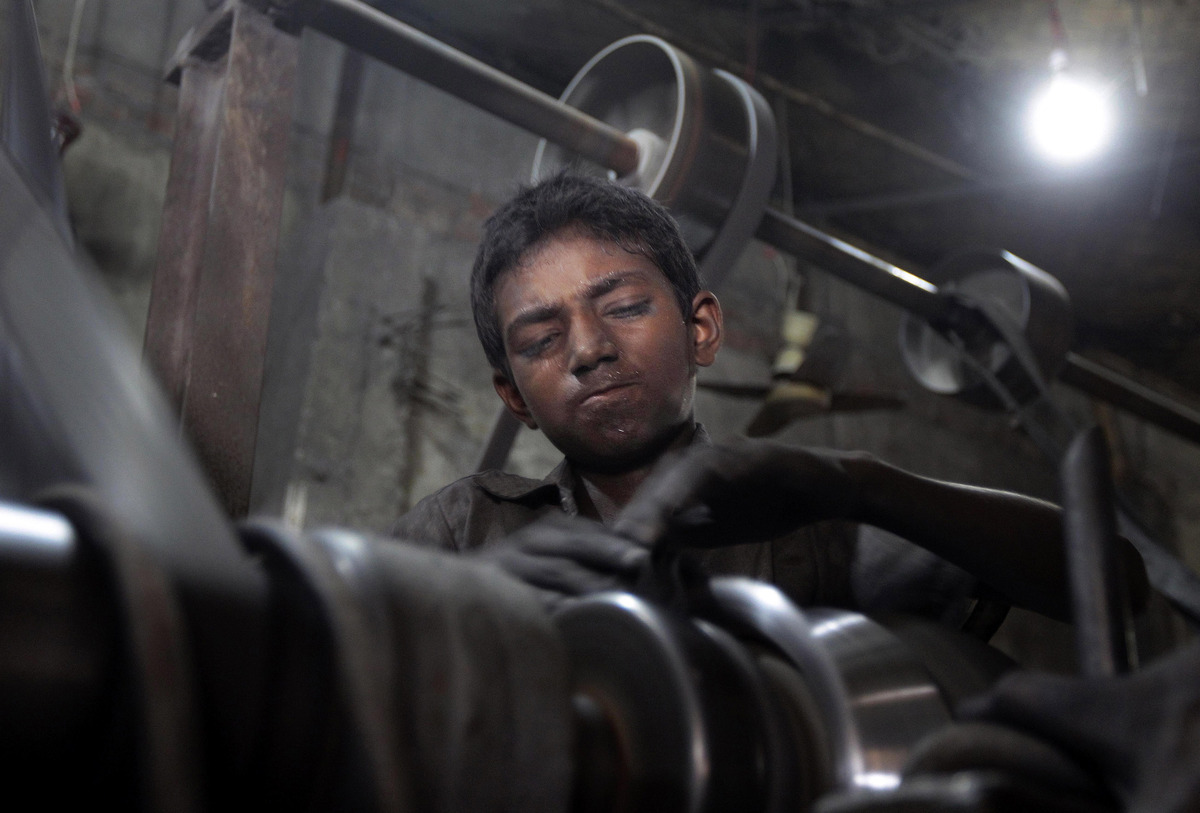
215 million. That's the number of child laborers in the world today. 1 in 6 children are child laborers, a fact that appears much more staggering when you put 1,000 children into a room - 167 would be child laborers. The statistics are grim, but the pictures are more so - Any child under 18 should not be subjected to such harsh and dangerous conditions.

There's a blurred line on what constitutes child labor. Are kids who work part-time and attend school in the remaining time child laborers? Are home-schooled children, who also help out greatly in the family business, child laborers? Is a 17 year old supermarket cashier a child laborer, if he or she has dropped out from high school? The age, situation, and occupation involved all determine the extent of child labor.

Another problem of child labor is weak law enforcement. Laws are one thing - There are plenty of national and international laws concerning child labor, but no one to enforce them. Often, the police turn a blind eye to the situation, or in some cases, are in leagues with the employer. Its brave organizations like Childline and BBA that work to combat this unfortunate truth with demonstrations, raids, and rescues of this own.

On the World Day Against Child Labor, I urge you all to get involved in the fight. The power of people, working together, is boundless and limitless, and just like slavery, child labor can become history if we will and want it to. As Aesop once said - "United we stand, divided we fall."

Friday, May 31, 2013

A Break...

Finals are coming up soon, and I am swamped with schoolwork. Therefore, for the next two weeks, I will be unable to post. I hope that you will continue to keep the issue of child labor fresh in your minds.

I'll see you all in two weeks!

Thursday, May 23, 2013

A Socio-Economic Quandary...

Instead of writing a blog post this week, I'm going to put out a question for debate - Please answer in the comments below.

A comment last week by my friend and fellow activist Nikhil got me thinking. Child labor is both an economic and social problem. Addressing only one of those issues will never solve the problem.

Economically, child labor is a result of financial hardship and poverty. Poverty and child labor are inextricably linked together, and child labor allows the cycle of poverty to propagate generation after generation. Cash transfers and income security seem to be a way of taking care of this side.

Socially, child labor is an entrenched norm in many cultures. Though poverty may be the root cause of child labor, child labor is now an establishment in many areas around the world, and uprooting that is extremely important as well. Educating people about the dangers of child labor seems to be a potential solution to this problem.

So what is your opinion? Is child labor more of a social or economic problem, or an equal measure of both? Again, please post our thought in the comments below!

Thursday, May 16, 2013

New Measures...Will they Really Work?

The UN  announced plans in early May to combat child labor, using novel, different strategies that have worked for many countries. Let's take a look...

Their World Report on Child Labor states that by introducing measures such as cash transfers to both parents and older people, as well as other social health measures, parents in the developing world are more likely to let their children go to school instead of forcing them into work early.

Brazil's Bolsa Familia cash transfer program, which provides families with a monthly allowance on the condition that they send their children to school, has been instrumental in reducing child labor in both rural and urban areas across the Latin American nation. Likewise, a scholarship program introduced in Cambodia, which also involves cash transfers, has reduced child labor there by 10 percent.

Social protection is also an important issue concerning child labor. More than 5 billion people around the world do not have access to comprehensive social protection. This massive figure contributes to the vast number of child laborers around the world. including the 115 million involved in the worst forms of child labor, debt bondage and prostitution included, and the 15.5 million involved in domestic work.

UN plans would guarantee basic income in the form of social transfers in cash or kind, such as pensions, child benefits, employment guarantees and services for the unemployed or working poor, while providing universal access to the essential basics of life. Those would include health, water and sanitation, education, food, and housing. In African countries when 50-60% of orphans live with their grandparents, income security in old age would also be extremely important.

These plans seem solid in theory, but they are much harder to implement in practice. The UN also estimates that it would cost $10 billion to implement universal education - Less than global military spending per year. Where does this money go? It gets lost somewhere along the line, never making its long journey from the big organizations to the poor, starving families in Africa and Asia. Child labor is a complicated problem.      But each step we take is one step towards a better future.

Thursday, May 9, 2013

Profile: Dr. Sunitha Krishnan

Dr. Sunitha Krishnan might not look like your typical hero, but nothing could be farther from the truth.

The 4'8" champion for women's rights is changing the world as we speak, with a beautiful story and lion-like passion. From the beginning, she wanted to help others. She became a social worker when she was younger, and started to help the poor children of her village and educate them. The sad truth of life unfolded: A gang of men who disliked the interference of a woman in a supposed "man's society" raped and severely beat her, leaving her for dead.

Calling Sunitha a rape victim is an insult to her resilience and determination. She bounced back, forming Prajwala, an organization working to combat sex trafficking and abuse in developing countries.  To this day, she has taken thousands of girls out of prostitution rings and into schools, emerging as a powerful voice of righteousness among such corruption and lawlessness.

Sunitha says: "I have this deep-rooted belief that my life is a providence by itself, and God has brought me in this world to do what I'm doing, and God will allow me to stay in this world so long as he believes that my mission is not done, and therefore I do believe that the day God believes that my work is done, I'll be killed or I'll die naturally, or whichever way is possible."

So many people are pushed done and trodden on. She decided to stand up and fight. You can do it too.

Check out this video of Sunitha's TED talk about sex trafficking and her organization:


Thursday, May 2, 2013

May Day and Bonded Labor

May Day is celebrated in different ways around the globe. In the US and Western European countries, workers with low-skill jobs protest for better conditions and more rights. In third-world countries, a different story unfolds.

In Pakistan, this historic day commemorates the social and economic success of the West in relation to the labor movement, and recognizes bonded laborers around the world who face a similar predicament to those 150 years ago.

Not just kids but entire families work to keep themselves not well-off, but alive. The husband, wife, and child work 12-14 hours a day making brick after brick. As a poor family said: "We make 1000 bricks per day; My wife and son who is 6 years old, we spend 12 to 14 hours per day and the wage we get is Rs. 450 ( $3.5 ).

These people have no right to education, health, recreation, or security. Gang rapes and food shortages are extremely common, and the cycle of poverty is propagated generation after generation.

So as we begin the month of May, think not just about the workers in North America and Europe demanding extra rights, but those in Africa and Asia, who merely want basic rights that should be so universal. May Day is the time to recognize them as well.

Thursday, April 25, 2013

A Break...

Hey everybody,

I'm in Washington D.C. for a competition this week, so I will be unable to write a full blog post. Sorry for the inconvenience!

See ya next week!

Thursday, April 18, 2013

Yes We Can...

Children can do amazing things.

The world's newest and youngest liberation movement will make its presence felt at a summit in Washington this week. The Common Forum for Kalmal Hari Freedom, the Nilphamari Child Marriage Free Zone, the Ugandan Child Protection Club, the Upper Manya Krobo Rights of the Child Club and Indonesia's Grobogan Child Empowerment Group may not yet be household names outside their own countries, but schoolgirls demanding an end to child labor, child marriage, and child trafficking - and inspired by the sacrifice of Malala Yousafzai - are borrowing the tactics of the US civil rights movement. Once cowed and silent, these young civil rights leaders have become defiant and assertive, and they are linking up across the world to demand justice for the 32 million girls and 29 million boys still denied places at school.

1 million out-of-school Pakistani children demanding their right to education have come together to sign a petition. Once a humble list of dusty scribbles on parchment, it is now due to be presented to Ban Ki-Moon next week. Malala Yousafzai will make her first public speech since her life-threatening injury, and the "Global March For Child Labor" is laying out its plans to eliminate child slavery in 2015 - the week after that. Social justice is not merely a concept, but a plan in action.

But, every year 10 million girls marry between the ages of 11 and 13. Fifteen million children are condemned to working full time in mines and sweatshops, on farms and as domestic labor. No scientific discovery or technological breakthrough is needed to build the 4 million classrooms and employ the 2 million teachers necessary to achieve universal education - just cash. But global education spending - only $3 billion a year at its peak - has been frozen for three years and is being cut. The Millenium Development Goals are slowly unraveling, and with less than 1000 days to go before it conclusion, it seems less of a reality than ever. More needs to be done, and fast.


Public anger is the greatest weapon of all. When people come together, monumental things can happen. The Civil Rights Movement was merely an angry mob at first. Every revolution in history is sparked by a group of  a few people who want change and are willing to do something about it. So today, I say to you: YES, WE CAN.

A few quarters in your pocket could mean the difference between work and school for a child. A trip to Africa or India could change the lives of several children, for the better. Let's do our part. Because if we can unite, anything is possible.

Thursday, April 11, 2013

We Are Silent

On April 18th, tens of thousands of young activists will go silent to honor all those around the world who are without a voice. I'd like to encourage you to do it too.

Free the Children's 'We Are Silent' campaign is approaching rapidly, and it's a great chance for those of us who want to make a difference, but don't quite know how to go about it. The challenge is to go silent for 24 hours, supporting those who are voiceless due to poverty and exploitation.

For each hour, you can pledge a dollar. It really does make a difference. $50 can provide classroom supplies for a school, and $100 gives a family clean water. With more, we can build a community or well or even a school itself. There are so many ways we can make a difference through the 'We Are Silent; Campaign. Set yourself a goal of going silent for an hour, or two. Because anything helps.

Check out this video about the 'We Are Silent' Campaign:


Learn more at http://www.freethechildren.com/get-involved/campaigns/we-are-silent/

Thursday, April 4, 2013

Do Something...

This week is a time for all of us to take a sigh of relief, take our minds of academics, and have fun. It's also a time for me to take a break from my blog, but not without a few words.

We might have a break, but the millions of child laborers around the world don't suddenly get the week off. It's now, when we sit around with nothing to do, that we can think about them, and do what we can. Donate a few dollars. Maybe get involved in Free the Children's campaigns. Educate yourself a little more on this topic. That's where it all starts.

I'd like for you all to check out this website, DoSomething.org. It's a great way for us, the youth, to get involved in causes ranging from bullying to child abuse and exploitation. This was introduced to me by a friend who is part of our FTC club in school.

I'll see you next week, where I'll have a little more information about a specific campaign of Free the Children's, "We Are Silent." Stay tuned!

Thursday, March 28, 2013

Child Soldiers - The Worst Form of Labor

When one thinks of war, they think of battle-weary, experienced soldiers in their mid-30s. Or maybe 20s. But certainly not 15. In fact, having an army of soldiers under 17 is almost unimaginable to us. But a reality elsewhere.

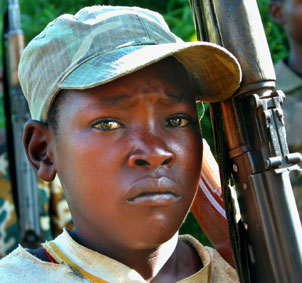
Imagine being caught in crossfire, having to fight for your lives, to make yourself into a killing machine. Some 300,000 children risk their lives every day in war, and another half a million are part of armies not in conflict currently. That's massive. Most of them are forced because of poverty or even abduction.

Many of the most serious offenders are in Africa. Liberia, DRC, Burundi, and Uganda, combined, account for more than 25% of the child soldiers in the world. Other hotspots for child soldiers are generally South America and Southeast Asia, and specifically Colombia and Myanmar.

Well, you may ask, what good do child soldiers do? Won't they be useless as soldiers? The answer is no. Being trusted, vulnerable, and easily intimidated, children can be manipulated to be daring and reckless, especially under the influence of drugs. The use of children in an army can greatly add to confusion on the battlefield, and presents a unique moral dilemma to opposing forces. If that is not enough, children have also been used as scouts, messengers, minesweepers, bomb-makers, and suicide bombers.

Child soldiers grow up to be mentally scarred, uneducated adults. But the problem will continue to perpetuate if conflict is not taken care of, and poverty not dealt with effectively, two near-impossible problems. For now, our hearts go out to the thousands of innocent children whose lives will never be the same, and we hope someday, the problem can be eradicated, once and for all.

Wednesday, March 20, 2013

Profile: Len Morris

You might have heard the saying: "A picture is worth a thousand words." Well then, could a video not be worth a thousand pictures? It certainly applies for Len Morris, the famed human rights filmmaker, who has risked his entire life to capture videos of children being tortured, abused, and slowly murdered.

Lee started out his venture with an educational program for child laborers in Kenya. It flopped. But Len refused to give up on his dream. In 2004, he filmed his fated documentary "Stolen Childhoods", which became a huge hit, for one simple reason - It was the voice of the children that spoke out for themselves. From five year old runaways begging in tatters on the streets, to fifteen year old prostitutes that live a life too miserable for most of us to imagine, we saw the children themselves speak up against child labor, and it should inspire us to make a difference.

Rescuing Emmanuel ( 2009 ) and The Same Heart ( 2010 ) were two other masterpieces of Len's, apart from dozens of other short videos and films that he taken traveling around the world to document human injustice. He has received the Iqbal Masih Award ( Remember him? ), the Walter Cronkite Award, and Images and Voices of Hope Award for his groundbreaking work. Truly, he is a hero in the midst of chaos, one who wishes and decides to stand up for what is wrong and right it as it should be righted. Thank you, Len Morris.


Thursday, March 14, 2013

Why Would Child Labor Be A Good Thing? Hmm...

A recent comment by a friend of mine provoked me to take a look at the arguments for child labor. They are weak, but have enough merit for me to address them - and then shut them down.

According to a recent study by the Royal Economic Society, banning child labor is misguided, does more harm than good, and can damage the economy and living standards of many families in developing nations. Labor by children contributes more money to their potential education, the study says, and forcibly removing children from work could have adverse effects on their wages and the family's welfare.

I agree. There's nothing more foolish than to take kids out of work, put them into school, and expect the family to adjust and recuperate. That's where the complexity of child labor comes in. In order to build and sustain an effective, populated school system, there must be an "alternative income", or another way for the family to earn money and sustain themselves. Therefore, the best way to tackle child labor is to focus on eliminating poverty, because only then can kids be able to go to school and break the cycle of poverty.


The thing is, often times rescuing kids from child labor might have the right reasons, but the wrong result. In 1993, Bangladeshi children were whisked away from their factory jobs and put into crude, falling apart schools. Within six months, they were found homeless and begging on the streets, even worse off than before. So, no, child labor is not a good thing. But it's a lot more complicated than we think it is.