Friday, June 28, 2013

The FLSA at 75

On June 25, 2013, we saw the 75th anniversary of the Fair Labor Standards Act ( FLSA ), a landmark piece of legislation signed by President Roosevelt in 1938. What did it do? Basically, it outlawed "oppressive child labor", imposed a federal minimum wage of 25 cents an hour, and limited work hours to 40 a week. A diamond jubilee later, we look into how well the FLSA in currently working.

Turn the clock back to 1938. Child labor is rampant, worker rights are being abused and conditions are terrible, and America still finds itself mired in one of the greatest economic collapses in history. This law was necessary to restore some sort of stability to the industry, but now it is not so favored among employers and employees alike.

On the employee side, the minimum wage of $7.25 per hour is viewed as inadequate and insufficient for workers to escape the poverty level. Particularly galling to employee advocates is the "tipped minium wage" for restaurant waiters that is only $2.13 per hour in many states.
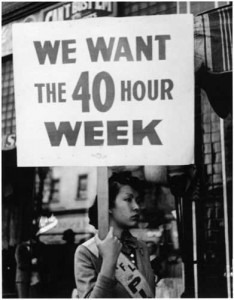
On the employer side, employees are being overworked ( over 40 hours ), with the misconception that if white-collar employees are paid a salary, then the 'overtime' rule does not apply. This has led to hundreds of FLSA cases and tens of millions of dollars of losses to companies.

But let me get to my real point - Child labor. A flurry of similar legislation in the 1930s helped almost completely get rid of this menace in the United States, but it wasn't just about the law - It was more about how well they enforced. Developing countries could do well to take after the US's war against child labor and poverty in the 1930's. With child labor still a prominent issue around the world, law enforcement, education, and alternative income are the most important things at hand right now.

Thursday, June 20, 2013

Into India...


I have a feeling that I'm not going to get much readership this week, due to summer break. Therefore, I will treat you with a video of an ABC News investigation, straight into the slums of India.

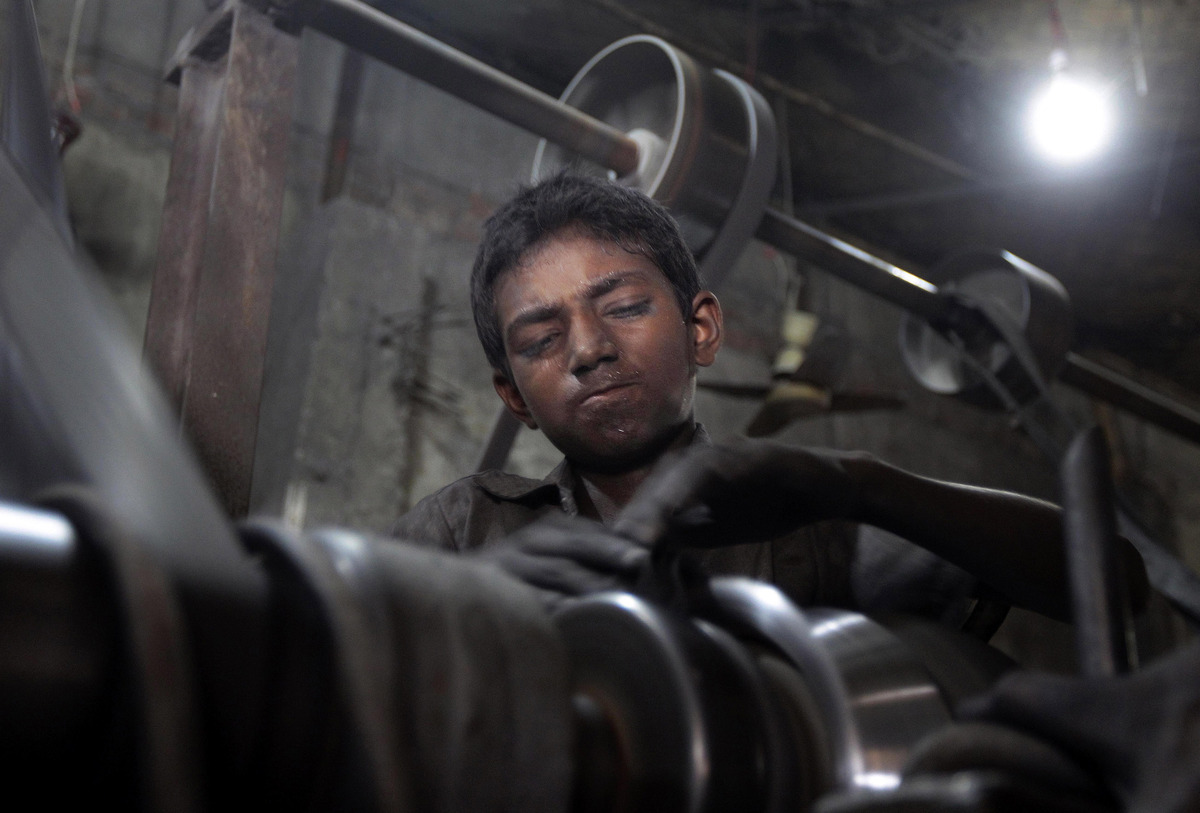
ABC's Bob Woodruff went on an expedition into India's coal mines, where children as young as 9 work one of the most dangerous jobs on the planet. The pitfalls and dangers that the children face every day of their miserable lives was almost too much for a grown, mature adult to bear. Check it out:


Hope you enjoy this video, and that it helps you better understand what really is behind child labor. 


Thursday, June 13, 2013

World Day Against Child Labor

June 12 marked the 'World Day Against Child Labor', the day that activists all around the world united in one strong, outspoken voice against this menace of society. Today, we commemorate the efforts of those involved in the fight against child labor, but more than that, we recognize the enormity of this problem and the hundreds of millions of children still desperately hoping for a chance to break free from the shackles of bonded labor.

215 million. That's the number of child laborers in the world today. 1 in 6 children are child laborers, a fact that appears much more staggering when you put 1,000 children into a room - 167 would be child laborers. The statistics are grim, but the pictures are more so - Any child under 18 should not be subjected to such harsh and dangerous conditions.

There's a blurred line on what constitutes child labor. Are kids who work part-time and attend school in the remaining time child laborers? Are home-schooled children, who also help out greatly in the family business, child laborers? Is a 17 year old supermarket cashier a child laborer, if he or she has dropped out from high school? The age, situation, and occupation involved all determine the extent of child labor.

Another problem of child labor is weak law enforcement. Laws are one thing - There are plenty of national and international laws concerning child labor, but no one to enforce them. Often, the police turn a blind eye to the situation, or in some cases, are in leagues with the employer. Its brave organizations like Childline and BBA that work to combat this unfortunate truth with demonstrations, raids, and rescues of this own.

On the World Day Against Child Labor, I urge you all to get involved in the fight. The power of people, working together, is boundless and limitless, and just like slavery, child labor can become history if we will and want it to. As Aesop once said - "United we stand, divided we fall."

Friday, May 31, 2013

A Break...

Finals are coming up soon, and I am swamped with schoolwork. Therefore, for the next two weeks, I will be unable to post. I hope that you will continue to keep the issue of child labor fresh in your minds.

I'll see you all in two weeks!

Thursday, May 23, 2013

A Socio-Economic Quandary...

Instead of writing a blog post this week, I'm going to put out a question for debate - Please answer in the comments below.

A comment last week by my friend and fellow activist Nikhil got me thinking. Child labor is both an economic and social problem. Addressing only one of those issues will never solve the problem.

Economically, child labor is a result of financial hardship and poverty. Poverty and child labor are inextricably linked together, and child labor allows the cycle of poverty to propagate generation after generation. Cash transfers and income security seem to be a way of taking care of this side.

Socially, child labor is an entrenched norm in many cultures. Though poverty may be the root cause of child labor, child labor is now an establishment in many areas around the world, and uprooting that is extremely important as well. Educating people about the dangers of child labor seems to be a potential solution to this problem.

So what is your opinion? Is child labor more of a social or economic problem, or an equal measure of both? Again, please post our thought in the comments below!

Thursday, May 16, 2013

New Measures...Will they Really Work?

The UN  announced plans in early May to combat child labor, using novel, different strategies that have worked for many countries. Let's take a look...

Their World Report on Child Labor states that by introducing measures such as cash transfers to both parents and older people, as well as other social health measures, parents in the developing world are more likely to let their children go to school instead of forcing them into work early.

Brazil's Bolsa Familia cash transfer program, which provides families with a monthly allowance on the condition that they send their children to school, has been instrumental in reducing child labor in both rural and urban areas across the Latin American nation. Likewise, a scholarship program introduced in Cambodia, which also involves cash transfers, has reduced child labor there by 10 percent.

Social protection is also an important issue concerning child labor. More than 5 billion people around the world do not have access to comprehensive social protection. This massive figure contributes to the vast number of child laborers around the world. including the 115 million involved in the worst forms of child labor, debt bondage and prostitution included, and the 15.5 million involved in domestic work.

UN plans would guarantee basic income in the form of social transfers in cash or kind, such as pensions, child benefits, employment guarantees and services for the unemployed or working poor, while providing universal access to the essential basics of life. Those would include health, water and sanitation, education, food, and housing. In African countries when 50-60% of orphans live with their grandparents, income security in old age would also be extremely important.

These plans seem solid in theory, but they are much harder to implement in practice. The UN also estimates that it would cost $10 billion to implement universal education - Less than global military spending per year. Where does this money go? It gets lost somewhere along the line, never making its long journey from the big organizations to the poor, starving families in Africa and Asia. Child labor is a complicated problem.      But each step we take is one step towards a better future.

Thursday, May 9, 2013

Profile: Dr. Sunitha Krishnan

Dr. Sunitha Krishnan might not look like your typical hero, but nothing could be farther from the truth.

The 4'8" champion for women's rights is changing the world as we speak, with a beautiful story and lion-like passion. From the beginning, she wanted to help others. She became a social worker when she was younger, and started to help the poor children of her village and educate them. The sad truth of life unfolded: A gang of men who disliked the interference of a woman in a supposed "man's society" raped and severely beat her, leaving her for dead.

Calling Sunitha a rape victim is an insult to her resilience and determination. She bounced back, forming Prajwala, an organization working to combat sex trafficking and abuse in developing countries.  To this day, she has taken thousands of girls out of prostitution rings and into schools, emerging as a powerful voice of righteousness among such corruption and lawlessness.

Sunitha says: "I have this deep-rooted belief that my life is a providence by itself, and God has brought me in this world to do what I'm doing, and God will allow me to stay in this world so long as he believes that my mission is not done, and therefore I do believe that the day God believes that my work is done, I'll be killed or I'll die naturally, or whichever way is possible."

So many people are pushed done and trodden on. She decided to stand up and fight. You can do it too.

Check out this video of Sunitha's TED talk about sex trafficking and her organization: